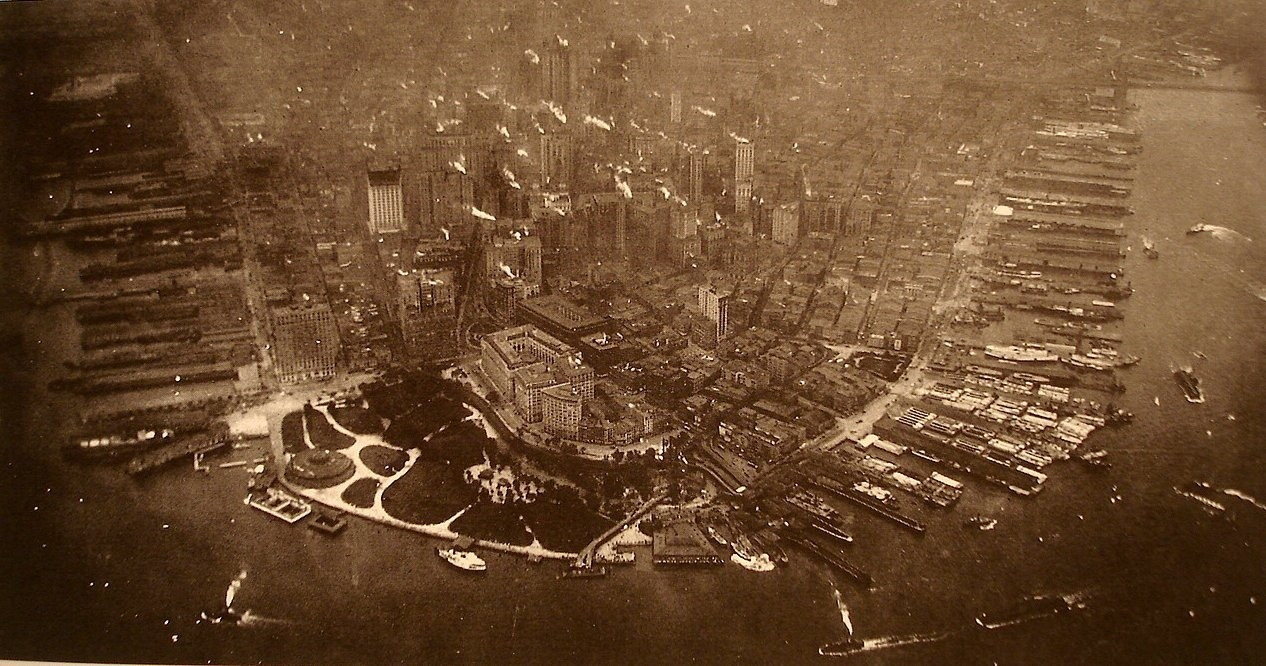
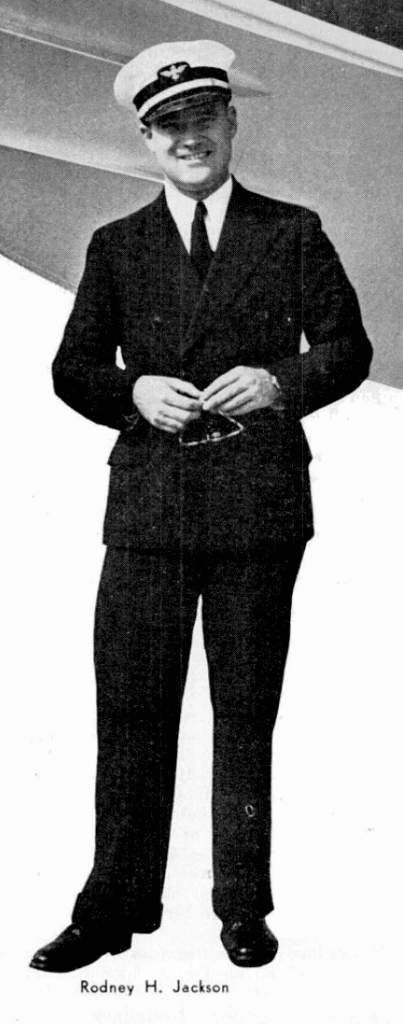
Rodney Hoisington was born to Lawrence and Georgia Jackson on August 23, 1905 on the upper west side of Manhattan. He was the oldest of four children. The Lawrence Jackson family moved to the White Plains area shortly after his birth and Rodney would grow up there. After graduating from White Plains High School, Rodney attended Harvard College where he studied aeronautics and founded the Harvard Flying Club,23 often claimed to be the first collegiate flying club in the world.4 Post-graduation he joined the Naval Reserves which sent him to Detroit – where he was a founding board member of another flying club56 – and subsequently to San Diego’s North Island. While stationed at North Island he married Marion Virginia Englebright, the daughter of a railroad engineer.7 The pair were legally married in Yuma, Arizona, but had their civil ceremony at Mission Hills Congregational Church in San Diego (now Mission Hills United Church of Christ).
After his year of active service at North Island was up, Rodney and Marion moved to Red Bank, NJ, where Rodney had been hired to pilot a private seaplane for a General Howard S. Borden, industrialist heir8 and longtime commanding officer of the New Jersey National Guard. Rodney’s first son, Barry, was born shortly after moving to New Jersey, and his second son Bruce was born a few years later.
Rodney occasionally flew charter flights for a service based out of Long Island while working for General Borden, and the connections formed there eventually led him to his next venture. General Borden would eventually give up on flying altogether, but this retirement did not impact Rodney’s career for long. In May 1935, industrialist Louis Root purchased an airplane in order to commute from his Southampton estate into his office in New York City, and he hired Rodney Jackson as his pilot. Seeing an opportunity to serve other businessmen in the Hamptons, the pair quickly became business partners and opened the Hampton Air Service, where Rodney served as vice-president, general manager, pilot, and manager of the airport operated by the service.9
The Hampton Air Service only existed for a few years, but Rodney gained a fair bit of local notoriety during that time in his work as both the manager of the air service and the manager of the airport itself. The long hours he worked and the variety of roles he took on in managing the airport ensured that he became well known to local fliers. Rodney wrote about his work in an article published in the August, 1936 edition of Aviation magazine:
Hampton Air Service, Inc., whose one airplane is bringing in a gross revenue of over $1,50010 a month during the summer, is an example of what a one-man airline can be made to do. The pilot goes by the title of vice-president and general manager, and as such divides his time between managing the local Hampton Airport, which is operated directly by the company, and conducting the airline.
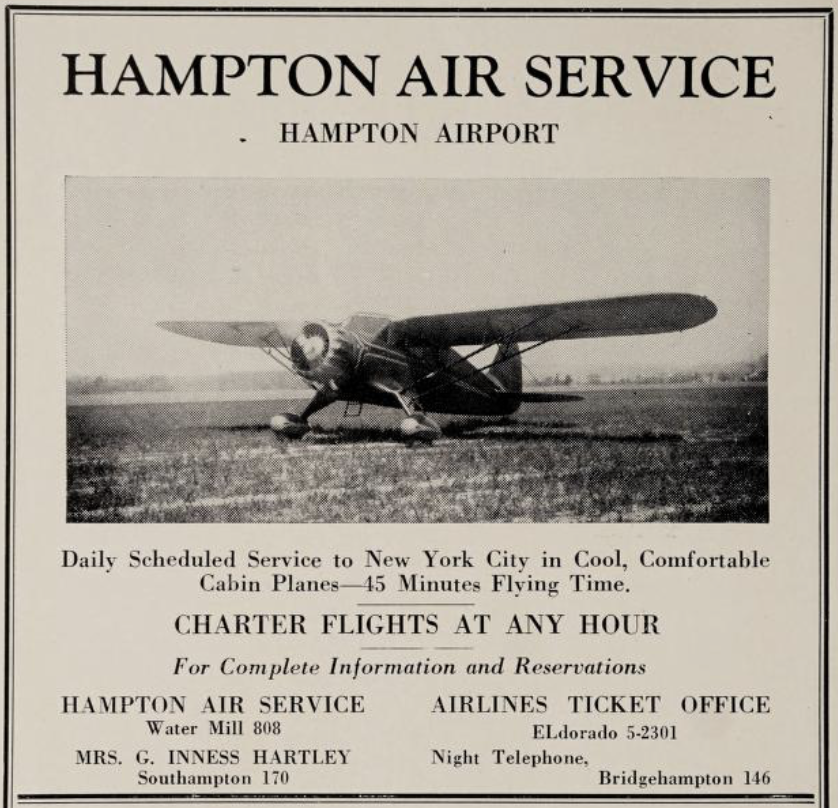
While the Hampton Airport that Jackson managed has since been effectively lost to time, it was the only airport in the Hamptons in the mid-1930s and thus was rather important to fliers of the day. Howard Hughes was a regular customer and would have known Rodney personally.11
The East Hampton Airport was approved for construction by the WPA in the fall of 1936. The construction of a rival airport across town was essentially a death knell for Jackson’s business; while I have not found anything specifically detailing the downfall of the Hampton Air Service, it hardly seems coincidental that they stopped printing advertisements in local newspapers around the same time that the much larger and federally-funded East Hampton Airport opened in 1937. Rodney ultimately resigned from his job there in 1938, and it is unclear whether the enterprise survived whatsoever after he left. Local maps only showed the location of the airstrip for a few more years, and the farms that replaced it have done an effective job of erasing any trace of the old facility from the property.
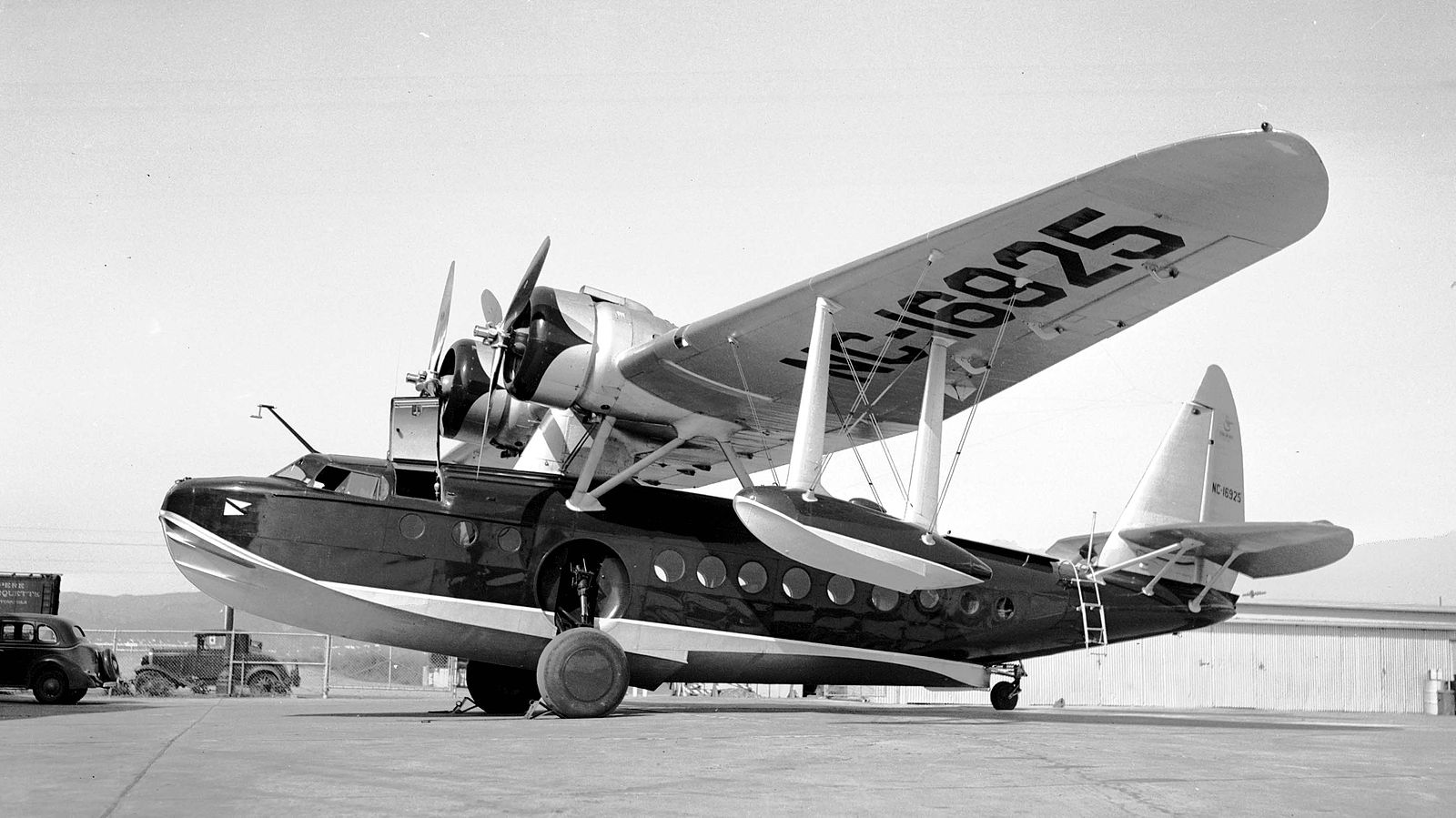
The sudden death of a wildly profitable enterprise may have been a bit of a blow, but Rodney was not one to stay down. The reason Rodney had resigned from his position in the Hamptons, American Aviation reported,12 was that William Kissam Vanderbilt II needed a pilot. Vanderbilt owned a Sikorsky S-43 – the largest privately-owned seaplane in the world – and the resignation of one of his pilots left an opening that Rodney was happy to fill.
Rodney’s job with Vanderbilt came with lots more publicity as newspapers tended to talk about the large Sikorsky, and would often mention the pilots by name in their reporting. The Vanderbilts lived between New York and their private island in Miami, so Rodney purchased a home in Coral Gables and the Jacksons became snow birds as well.
This career move, ideal as it seems to have been for someone with Rodney’s background and temperament, was not to be long lived. Vanderbilt wanted to go airplane shopping, and the shopping trip Rodney flew him on would drastically alter the course for every member of the Rodney Jackson family.
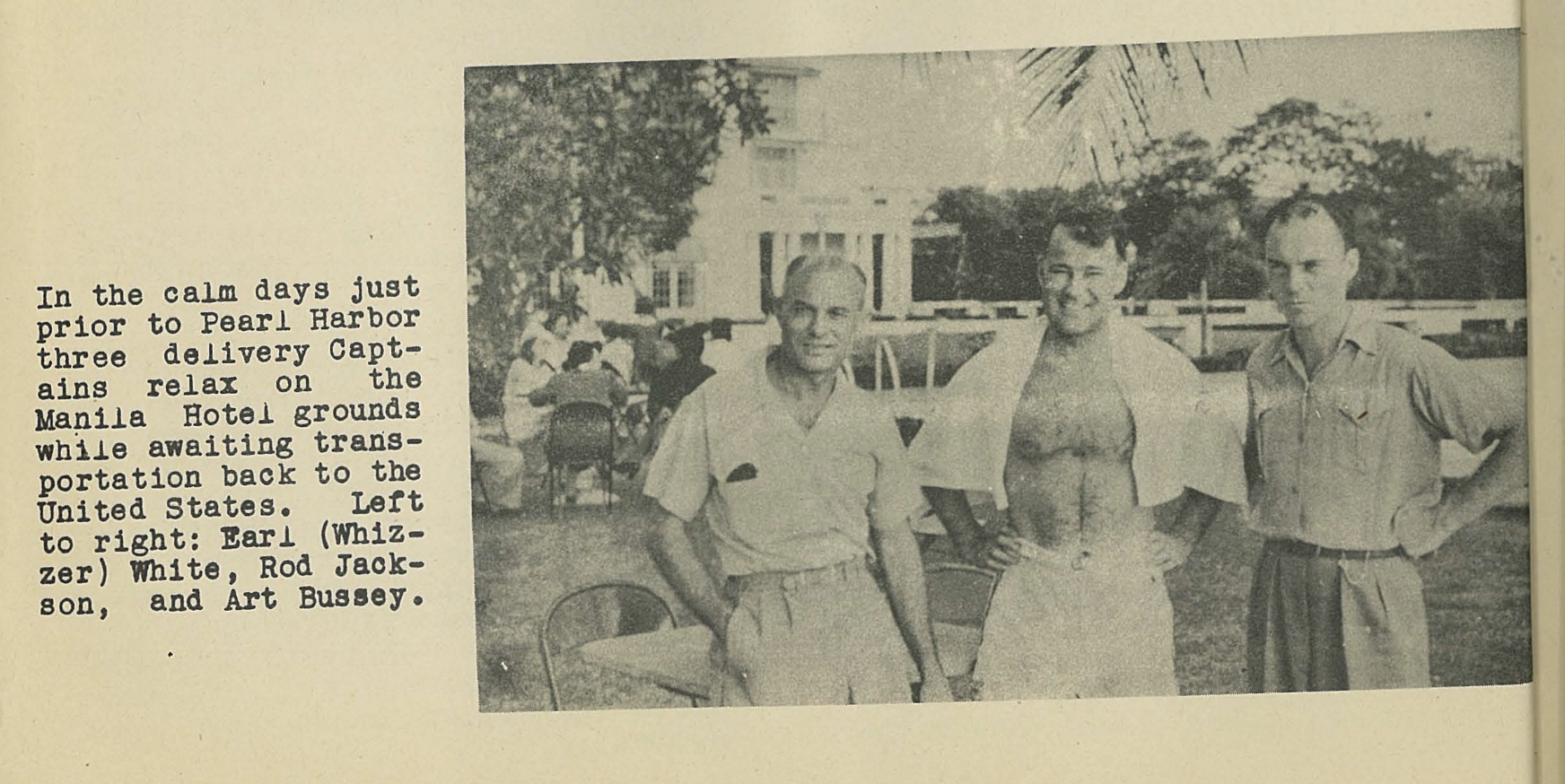
The flying boat in question was Consolidated-Vultee’s PBY, and Rodney took Vanderbilt to San Diego to hear the sales pitch. The salesman at Consolidated was an old friend, and (in addition to his sales pitch to Vanderbilt) he had another pitch for Rod: war was looming, and flying for Vanderbilt would not be a good enough excuse to avoid going on Active Duty with the Navy. Evidently the young father was not keen to be suddenly sent into a combat zone, and Consolidated had a flying job that would allow Rodney to contribute to the war effort without leaping headfirst into harm’s way, so it was not long before he reluctantly turned in his resignation and packed up the new house in Miami.13
Rodney began ferrying newly built seaplanes from the Consolidated aircraft factory in San Diego to strategic positions in the South Pacific and elsewhere. On moving back to San Diego, the Jacksons settled in Del Mar and quickly became notable figures in the tight-knit beach community. Their next door neighbors at the time were the John Lloyd Wrights, and the home they lived in was around the corner from the historic Canfield-Wright House.14
While any pilot spends time away from home during the course of their work, this new job took Rodney away extremely often and for extended periods of time. The trip to drop off the aircraft was a multi-day affair involving continual refueling and rest stops throughout, and the return trip typically involved the usage of an even slower ocean liner. At the end of the war Rodney continued flying to the South Pacific on United Nations Relief and Rehabilitation Administration (UNRRA) flights, which were much the same pattern except that he brought the airplane back with him rather than leaving it behind. Marion had remained back home with the children during all of his time away, and after the war was over it was decided to make that arrangement permanent.
The divorce was amicable enough. Marion stayed in Del Mar with the kids, while Rodney moved to Ontario, CA, which was a major hub for flights to Asia. There he had several boarders – mostly other divorced men, all much younger than himself – and he remained for several years. In the mid-1950s he moved close to his companies headquarters in the Bay Area. There, he married a woman named Ethel Young and had two children, Linda and Larry. This final chapter of Rodney’s life was by far the quietest; he largely stopped appearing in the press and remained in the same general area until his death in 1981.
While he’s largely been forgotten to history, Rodney’s contributions to the history of aviation remain in newspaper records, magazine archives, and – more recently – aviation quote compilations and books:15
Real confidence in the air is bred only by mistakes made and recovered from at a safe altitude, in a safe ship, and seated on a good parachute.
– Rodney H. Jackson, “A Lesson In Stunting,” Aeronautics Magazine (Feb 1930)
- 1939-02. Check Yourself Out. Popular Aviation (pg. 57) ↩︎
- 1926-05-10. Harvard Flying Club. Aviation Weekly (pg. 10) ↩︎
- 1927-03-16. Harvard Flying Club Begins Third Season. Harvard Crimson. ↩︎
- 1952-10-29. Aviation Club Mixes Flying and Partying. Harvard Crimson. ↩︎
- 1928-06-08. Sparks from Detroit. Automotive News (pg. 2) ↩︎
- The cited article mentions that the president of the club was 35-year-old Warren Packard, father of two and heir-apparent to the Packard automotive fortune, who tragically perished just a year later when his own seaplane stalled out south of Detroit. ↩︎
- 1929-04-07. Social Affairs of Army, Navy. The Los Angeles Times (pg. 64) ↩︎
- General Borden was the grandson of M. C. D. Borden and the great-grandson of Col. Richard Borden of Fall River, Massachusetts. ↩︎
- 1936-08. One-Man Airline. Aviation (pg. 32) ↩︎
- Equivalent to nearly $35k/mo in 2025 ↩︎
- 1972-02-16. Recalls Exciting Day With Howard Hughes. Red Bank Daily Register (pg. 1) ↩︎
- 1938-01-15. Vanderbilt Pilot. American Aviation (pg. 2) ↩︎
- Del Mar Voices: Marion Morgan Interview ↩︎
- The Canfields were long gone by the time the Jacksons got to Del Mar, but Charles A. Canfield was one of the oil tycoons who inspired the novel Oil! and its adaptation There Will Be Blood. ↩︎
- English, Dave (2003). The Air Up There: More Great Quotations on Flight. McGraw-Hill, NY. ↩︎