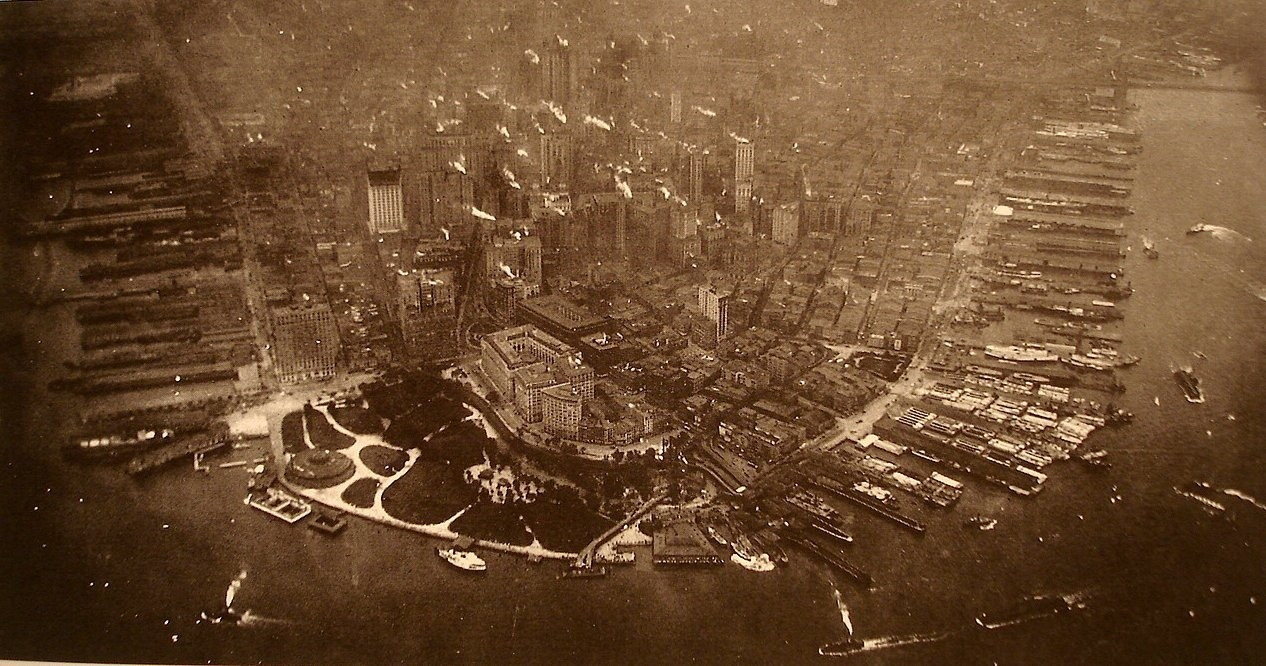
Birth to High School — 1905-1918
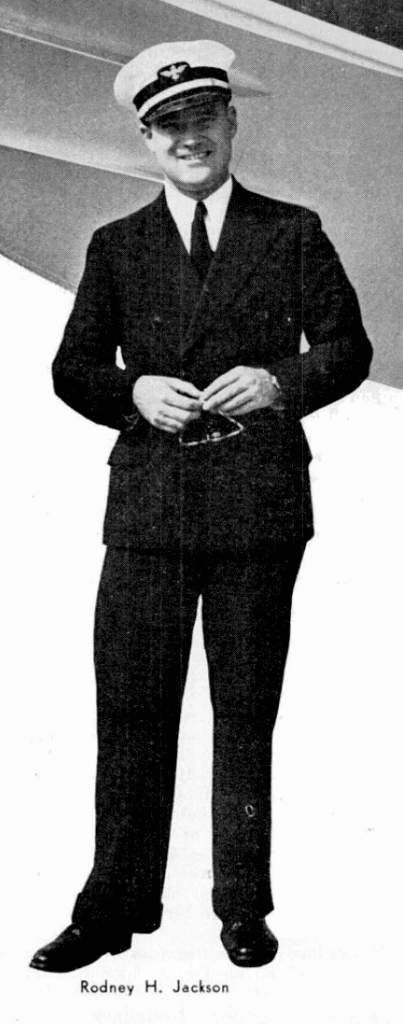
Rodney Hoisington Jackson was born on August 23, 1905. On the same day was born Ernie Bushmiller, cartoonist famed for creating comic strip character Nancy, and Constant Lambert, founding music director of the Royal Ballet. The newspapers of the morning would have heavily featured various elements of the Russo-Japanese War — the New York Times led with an article about President Roosevelt-mediated peace talks which ultimately led to the end of the war a month later,1 but also featured an article about shipwrecked Japanese sealers who had been shot off the coast of Russia while awaiting rescue2 — and the ongoing Russian Revolution which began several months earlier.

In New York City, where Rodney was born, much would have been made of a historic dirigible flight in the city. A. Roy Knabenshue – an early pioneer of aviation – had promised the first dirigible flight over New York City the previous Sunday, which drew large crowds (the New York Times claimed that “not less than 300,000 witnessed” the flight4) as he piloted his ship from Central Park to the Times headquarters (now known as One Times Square) and back, “steered with perfect ease” at heights up to 1,000 feet. This success was front page news the next morning and the announcement that it was merely the first in a series of trial flights over the city drew great excitement for the coming days. The crowds gathered outside the tent across the street5 from Central Park on Monday waiting for the one-man dirigible balloon to rise above the compound, but some eventually trickled away and the rest finally left after it was announced that no flight would be attempted. “The machinery was not quite in order and the wind was a little too strong,” said the Tribune.6

Tuesday morning brought more disappointment. The winds were even stronger and the 28-year-old inventor was not willing to brave them for the benefit of the gathered throng. On Wednesday, The New York Times printed criticism from other aviation pioneers who used the repeated failure as evidence that airplanes, not dirigibles, were truly the airship of the future.7 “Within a year I expect to see dozens of aeroplanes gliding through the air” said Israel Ludlow, a New York lawyer and prospective airplane builder (who was left permanently injured when his own invention later crashed).8
While the Times was criticizing his methods, Knabenshue spent Wednesday piloting the balloon on his highest flight to date. Rumors that Knabenshue was planning to distribute surplus money from his backers by scattering paper checks from the sky ensured that the streets were as packed as they had ever been and that the crowd was buzzing with excitement for the promised attempt. While it seems like the scattered money was a bit of an urban legend, the multitudes would not have gone home entirely disappointed as the flight itself proved to be the most successful yet attempted in a dirigible. Knabenshue bested his previous altitude record by over double.
Mr. Knabenshue said later that he knew he must have reached a height of 5,000 feet at least because the safety valve was forced open by the increased pressure of the gas from within as the air grew thinner. 9

This success did not dissuade the doubters. Despite the higher altitude and the relative ease in returning to his starting point, Knabenshue’s struggles with wind were still apparent. “His experiment proves no more than that the dirigible balloon is an interesting plaything,” the New York Times header on page 7 reads. Despite the fact that “any breeze faster than six miles an hour” spelled defeat to the prospective dirigible entrepreneur, the Times still admitted that…
…as a plaything, pure and simple, there are few human inventions that can beat the dirigible balloon, especially on a cloudless day like yesterday, when the bright silk of the bag stands golden against the luminous blue of the sky, and the framework of the ship looks like a gracefully shaped sleigh with silver runners. Thousands of Manhattan folks nearly twisted their necks out of joint in their eagerness to behold that picturesque spectacle.
The Evening World chose more colorful language in their description of these eager onlookers:

AIRSHIP PUTS KINK IN NECK
Thousands of Twisted, Dislocated and Fractured Vertebrae Swathed in Liniment and Bandages To-Day as Result of Knabenshue’s Cavortings in Heavens
August 24, 1905 — The Evening World
New York has a kink in the neck today from its Knabenshue rubbernecking orgy. All sorts and varieties of strained collar-bones are undergoing divers treatments to recover suppleness of the upper dorsal vertebrae. Not since the three tailed comet of 1823 have the inhabitants of this town done so much sky-gazing as they did at that airship, and, after the strain, it is hard for them to pull their necks down to a normal poise.
Veracious observers report that men and women can be seen in the main thoroughfares carrying their heads high with a singularly painful haughtiness, also that there are some swan-like stretches of neck that would put a flamingo to shame, so weird are the twists and kinks wrought in them through watching the upper circumambient while Roy of the Clouds soared along the sky line in his dirigible balloon.1011
While others in Manhattan were twisting their necks out of joint to marvel at the latest innovation in aerospace technology, Rodney Jackson was a few miles uptown entering the world.
Rodney was the first child of Lawrence Stelzner Jackson and Georgia Hoisington Savage. Rodney’s parents, in their 20s at the time, were living with Georgia’s parents. The 1905 New York State Census, taken just a couple months before Rodney’s birth, tells us a lot about their living situation at the time.

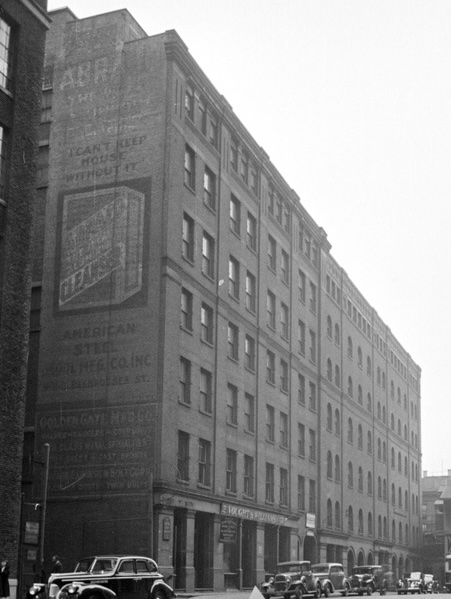
Georgia’s parents, William Cunningham Savage (written as “Wm” in documents at the time) and Ida Corina Bowman, had a house at 415 Riverside Drive on the upper west side of Manhattan, just north of the upper edge of Central Park and well isolated from the hubbub of the day’s aerial excitement. Besides Rodney’s parents and grandparents, the only other residents were two Swedish kitchen staff, Julia Nelson and Gustava Benson. Julia was 25 and waited on the family, while Gustava was 38 and cooked.
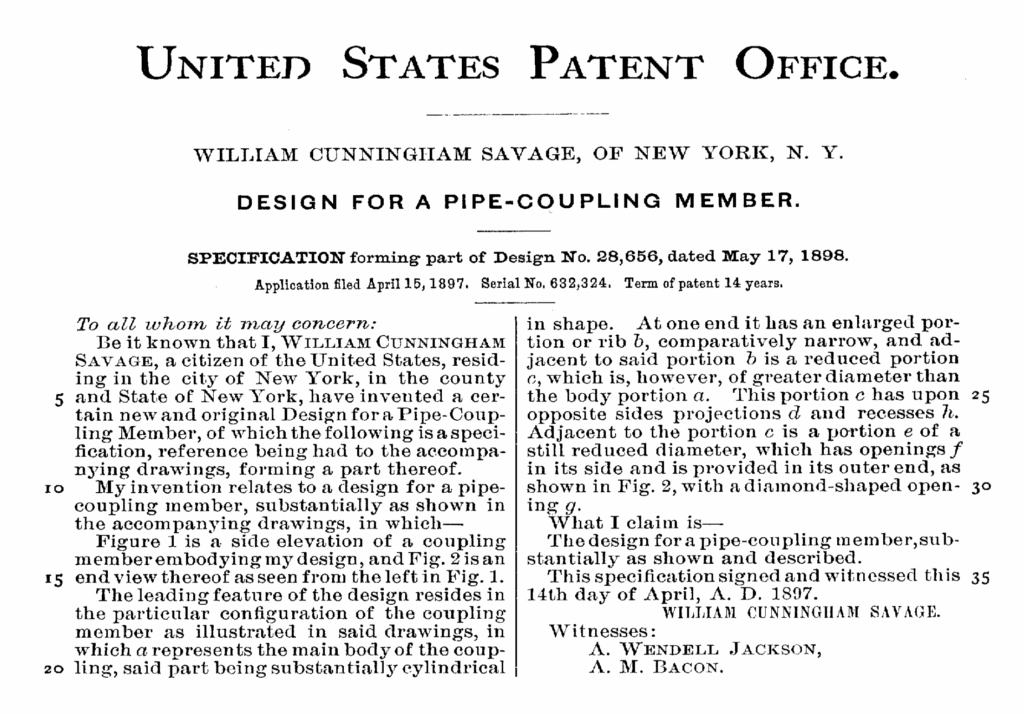
William Savage called himself a brass goods manufacturer13 in the 1905 census, and Lawrence worked for him as a salesman. The Golden Gate Manufacturing Co. based their factory operations in San Francisco, but their east coast office was in New York City. They were primarily known for manufacturing brewery equipment, but they served a wide variety of industries in their heyday.
Both of Lawrence’s younger brothers lived close by with their mother Alice at St. Nicholas Park while the youngest, Evert, finished his schooling. Rodney’s grandfather Abraham spent 1905 on business in Paris.
The living situation that greeted Rodney upon his birth did not last long. His grandfather William sold the five story, 25×99′ Riverside Drive house to a Helen S. White in 1906,14 and the structure was replaced in 1910 with another five story townhome that today serves as faculty/staff housing for Columbia University.15
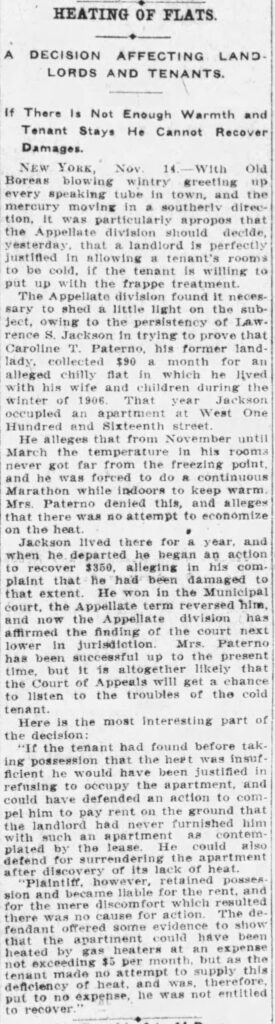
Lawrence S. Jackson, meanwhile, moved his family just a few blocks away to 116th St. in an apartment rented out by Carolina T. Paterno, mother of the Paterno Brothers who built Morningside Heights. While the Paterno family legacy is incredibly apparent in the character of the neighborhood to this day, Lawrence was less concerned with the historical significance of his flat or historical legacy of his landlord than he was the practical realities of winter in New York City.
[Jackson] alleges that from November until March the temperature in his rooms never got far from the freezing point, and he was forced to do a continuous Marathon while indoors to keep warm. Mrs. Paterno denied this, and alleges that there was no attempt to economize on the heat.
Jackson lived there for a year, and when he departed he began an action to recover $350, alleging in his complaint that he had been damaged to that extent. He won in the Municipal court, the Appellate term reversed him, and now the Appellate division has affirmed the finding of the court next lower in jurisdiction.16
Unfortunately for Lawrence, the Supreme Court of New York ultimately decided that he would have been entitled to damages had he moved out of the apartment early or spent his own money on gas heating, but as he waited until the lease was up to raise a complaint he was instead entitled to nothing.
This incident seemingly marks the end of baby Rodney’s time living in Manhattan. By the time of the 1910 US Census, Lawrence had moved the family out to a rented house on Lincoln Ave (now known as Beach 124th St.) in Rockaway Beach, Queens. The intervening years had also brought two new siblings for Rodney: a brother, Berkeley, came along in 1908, and his sister Merle was born in 1910.
The Savage grandparents moved back in with their family by this census, but this time are shown as Lawrence’s tenants rather than the other way around. Also living with the family at the time of the census were a 25 year old German servant named Gertrude Scheneberg and a 42 year old English servant named Nellie Spiel. Nellie had two children and was widowed. Gertrude had moved to America when she was nine years old and Nellie when she was 12.17

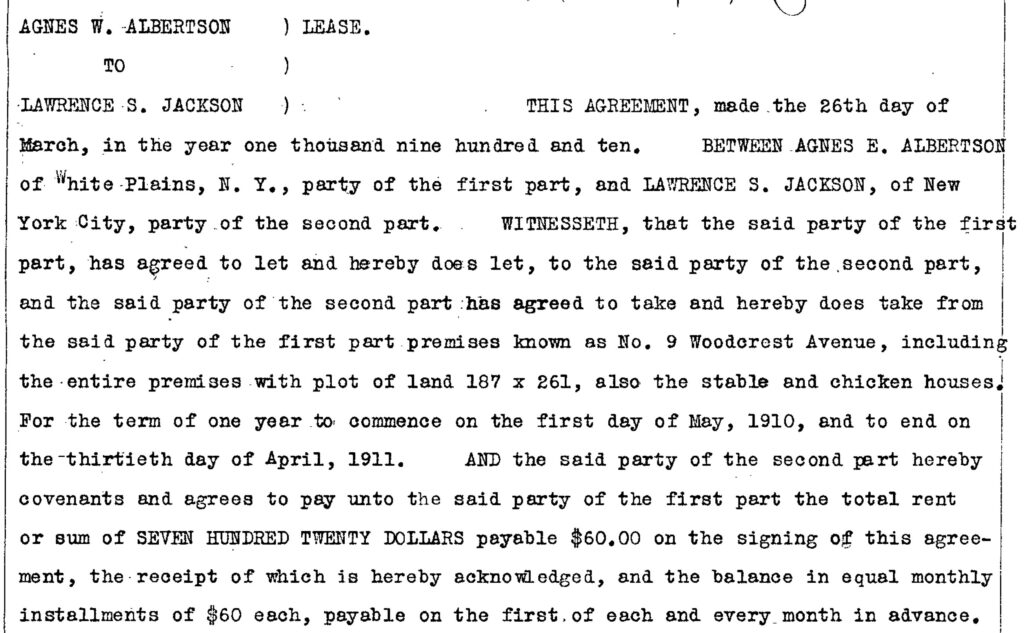
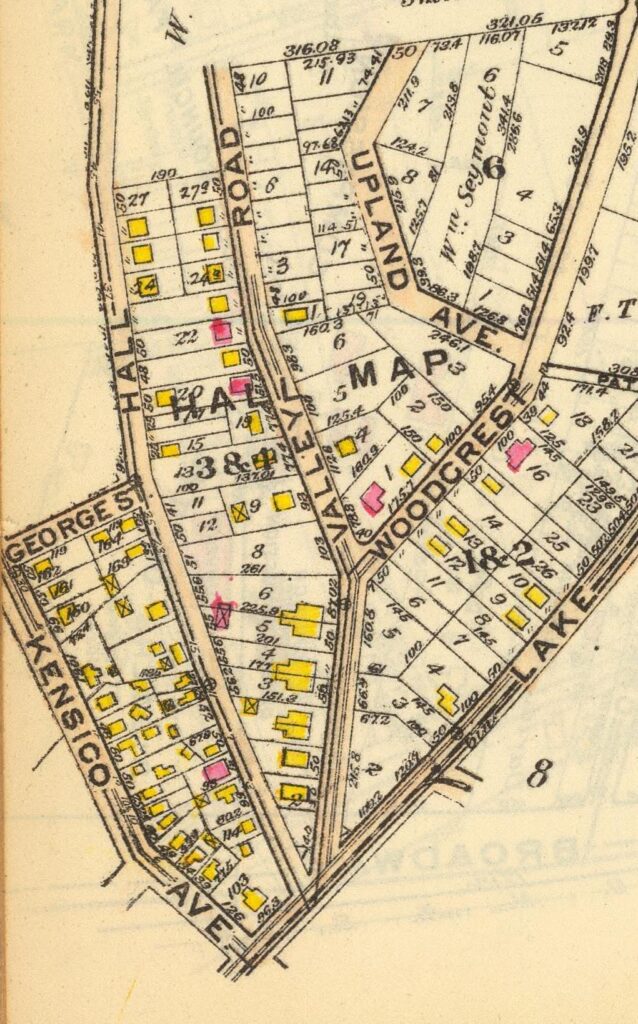
Shortly after the 1910 census was taken, the Jacksons moved all the way outside the city to White Plains, New York, and finally settled down. Lawrence ultimately rented 9 Woodcrest Ave for close to a decade before buying property in town. These first years that the Jackson family resided in White Plains were a time of great expansion for the Westchester county seat.19 White Plains would not formally incorporate as a city until 1916, when Rodney was 11 years old and the family had lived there for six years already.
In 1912, when Rodney was seven years old, his grandfather Abraham W. Jackson spent some time in the international press due to the private loan that he orchestrated between Birch Crisp & Co. of London and the nation of China. His father Lawrence spoke to the press about the deal at the time, and interviews and articles about the loan were printed in newspapers across the country and around the world.22
The press interviews with Lawrence do give some tidbits about the family’s life at the time. His mother Alice was staying with them temporarily while Abraham was off traveling between China and London. Despite living in White Plains, Lawrence was still working out of the same office in lower Manhattan for his father-in-law, and he refers to the White Plains house as a “summer home.” It’s unclear exactly where the family’s winter home would have been as records going forward generally give either the White Plains address or else the address of the office.
1913 brought Rodney’s youngest brother, Eliot Savage Jackson, who was born on August 25 (just two days after Rodney’s birthday on the 23rd). This birth was the start of a very tumultuous time for the young family. Ten days after the birth, Georgia unexpectedly made Lawrence a widower.23 The mother of four was 35 at the time; Rodney was hardly 8. The exact cause of death is unclear.
In the immediate aftermath of his wife’s sudden passing, Lawrence traveled aboard the RMS Olympic (which had been retrofitted with new safety features after the sinking of the Titanic) to London and returned a couple weeks later on the RMS Celtic sailing from Liverpool. The exact purpose of his visit is unclear, but he was reported to have been visiting Paris24 where his father Abraham was living at the time.
Lawrence’s return to New York was no happier. Two weeks after the Celtic deposited Lawrence back on New York’s Pier 54, William C. Savage died at home in Manhattan.26 Besides being Georgia’s father and the grandfather of their children, Savage was still Lawrence’s employer, so the death impacted the family in more ways than one.
The period following this upheaval was quiet. No one in the family was in the headlines, and no major family events made their way into the record books. The next record of the Jacksons is the 1915 New York State Census, taken when Rodney was nine years old. His grandmother Alice had moved in to help with housework, though how much housework she was needed for is unknown given that the family also had three servants living with them. Their cook, Emma Johnson, was 45 and Swedish. The other two servants were Nannie Dallan, a 35 year old from Sweden, and Marry Keller, a 33 year old from the US.27
The quaint dirigibles of Rodney’s birth year had, by this point, given way to slightly less-quaint reconnaissance airplanes, and by the end of World War I, even less-quaint fighters. By the time Rodney entered high school at the end of the war, aviation had gone from the domain of the crackpot inventors to that of the warmonger; within a few years the commercial uses were clear and the only job he would ever hold, commercial airplane pilot, would come into existence.
- 1905-08-23. President Advises Sakhalin Payment. The New York Times. (pg. 1) ↩︎
- 1905-08-23. Russians Shoot Castaways. The New York Times. (pg. 2) ↩︎
- 1905-08-23. The New York Times. (pg. 1) ↩︎
- 1905-08-21. Knabenshue’s Airship Sails Over City. The New York Times (pg. 1) ↩︎
- Several articles mention his work tent’s location being at the corner of 62nd St. and 8th Ave. (8th has since been renamed to Central Park W. Ave. for the segment adjoining the park), but none mention on which side of 62nd. the compound was located. ↩︎
- 1905-08-22. Pegasus Remains in Stall. The New York Tribune (pg. 10) ↩︎
- 1905-08-23. Too Windy for Airship. The New York Times (pg. 3) ↩︎
- https://www.earlyaviators.com/eludlow.htm ↩︎
- 1905-08-24. Sails In His Airship Down to the Flatiron. The New York Times (pg. 7) ↩︎
- 1905-08-24. Airship Puts Kink in Knickerbocker’s Neck. The Evening World (pg. 5) ↩︎
- Both illustrations on this page come from this Evening World article. ↩︎
- 1905 New York State Census. A.Dist. 21/E.Dist. 47 (pg. 74, lines 31-36) [Ancestry][FamilySearch] ↩︎
- The company he was president of, Golden Gate Manufacturing Company, produced a variety of brass goods (including things like automobile grilles) but were most known for bar equipment like faucets and valves. The manufacturing seems to have all been done close to the San Francisco headquarters from what I can tell, so the New York office likely dealt more with the sales/client relations side of things— though records are spotty so it’s hard to say. ↩︎
- 1906-10-30. Operator in Big Deal. The New York Tribune (pg. 14) ↩︎
- https://residential.columbia.edu/content/415-riverside-drive ↩︎
- 1908-11-14. Heating of Flats. Syracuse Herald-Journal (pg. 2) ↩︎
- 1910 US Census. Queens, N.Y. Dist. 2/1245 (pg. 3A, lines 36-44) [Ancestry][FamilySearch] ↩︎
- Censuses were taken by hand and mistakes were not common, but also not uncommon. ↩︎
- https://www.cityofwhiteplains.com/469/History-of-White-Plains ↩︎
- The construction of the I-287 Cross Westchester Expressway changed the house numbering system of Woodcrest Avenue while also eliminating a number of lots and changing the road layout nearby. I’ve gone so far as to decipher handwritten property deeds from the 1800s in an attempt to pinpoint where 9 Woodcrest was, but I haven’t been able to come up with a definitive answer. However, official property maps from the era only show one possible lot that fits the dimensions specified in the lease: the lot which now contains the 1927-era farmhouse known today as 15 Woodcrest (shown as lots 4-6 on the left side of Woodcrest Ave in the map). ↩︎
- 1914. Map of White Plains, N.Y. G. W. Bromley & Co. (sheet 12) ↩︎
- These articles are found in print newspaper archives that have not been digitized, so there is no easy way to link to a source. I plan to reprint some of those here eventually but the entire affair is a pretty complicated web of business dealings and I want to untangle it a bit first in order to understand the historical context of the articles published at the time. ↩︎
- 1913-09-06. Died. The Yonkers Statesman (pg. 6) ↩︎
- 1913-10-07. Paris Personals. The Brooklyn Daily Eagle (pg. 26) ↩︎
- 1913-10-24. Died. New York Tribune (pg. 9) ↩︎
- 1915 New York State Census. A.Dist. 4/E.Dist. 3 (pg. 13, lines 23-28) ↩︎